Posted by: seattledizzygroup | February 29, 2016

Everyday Tips for Living with a Vestibular Disorder

Day-to-Day Tips and Essentials for Living with Chronic Illness and Strategies for Everyday Vestibular Challenges

Living with a “new normal” of chronic dizziness and imbalance comes with various everyday challenges. These articles offer tips and essentials for living with chronic illness as well as strategies for coping and finding balance with a chronic vestibular disorder:

10 Indispensables for Those with Chronic Illness

More Indispensables for Those with Chronic Illness

Should I or Shouldn’t I? The Dilemmas of Living with Chronic Illness

How to Have a Productive Day When Living with Chronic Illness

11 Things People with Chronic Illness Need to Do

Living with a Vestibular Disorder: Tips to Help You Cope with Everyday Challenges

My Everyday Items for Meniere’s Disease

Traveling with Dizziness

The Spoon Theory

© Copyright 2016, Seattle Dizzy Group. All rights reserved.

Posted by: seattledizzygroup | January 31, 2016

Good Things Ahead in 2016

We Had a Great 2015! Join Us for an Even Better 2016!

Seattle Dizzy Group is a respected leader in the vestibular and balance disorders patient support community with increasing national and global reach. (Read about our 2015 Highlights below). We anticipate more good things to come and are excited for the year ahead, especially since we will be celebrating 10 years together this fall.  We hope you will join us in 2016 and help us continue to grow, provide much-needed community, and offer support to people living with chronic dizziness and imbalance–in Seattle and beyond.  With your help, we can continue to expand community outreach and involvement (including hosting professional speakers on various vestibular/balance topics and connecting with local health providers/resources) and also increase our advocacy efforts to raise awareness about vestibular and balance disorders (including participating in Balance Awareness Week with our annual Walk for Balance Event, see Making a Difference for Balance Awareness).

Get Involved!

Seattle Dizzy Group is organized entirely by volunteers (the majority who are personally impacted by chronic dizziness and imbalance). We need your help to keep moving forward in 2016! We invite you to contribute to our group however you are able. Spread the word about Seattle Dizzy Group and invite others to join us. Share Seattle Dizzy Group information and resources with others. Participate in online discussions. Help with hosting in-person meetings and activities (be a greeter, assist with room set-up and take-down, bring snacks, provide transportation, etc.). For more info, email: info@seattledizzygroup.org.

We are an independent, not-for-profit group funded through donations. As we continue to grow and expand our outreach efforts, we are naturally incurring more expenses. Our goal is to continue to offer free support and resources to those in need in the vestibular community–in Seattle and beyond. Please consider supporting Seattle Dizzy Group with a financial gift to help us keep growing and thriving in 2016!  (Any amount is greatly appreciated!).

Ways your financial gift helps support Seattle Dizzy Group:

  • Providing materials, supplies, and hosting for monthly support group meetings.  (Each meeting costs about $25, or about $300 annually).
  • Providing thank you gifts for guest speakers. (As funds allow, we strive to honor speakers with about $25 value gift, or about $100 annually).
  • Providing administrative support, online services/resources, and website hosting, etc.  (Administrative costs are about $300 annually).
  • Providing funding for Balance Awareness Week event(s) and other group activities.  (Costs may be about $50-$100 or more per activity).
To give Seattle Dizzy Group a donation of any amount by credit card or PayPal, click the “Donate” button below.

PayPal Donate

(Gifts to Seattle Dizzy Group are not tax deductible).

THANK YOU for your support!

2015 Highlights

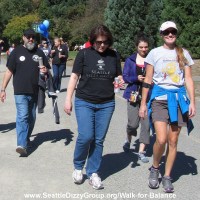
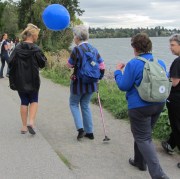
  • In September, we hosted our Fifth Annual Walk for Balance Event in celebration of Balance Awareness Week and Falls Prevention Day with a goal of raising awareness for vestibular and balance disorders and showing our support for people living with chronic dizziness and imbalance. We invited others to “Walk a Mile in Dizzy Shoes” with us and increased our impact during our walk at Green Lake by wearing blue, Seattle Dizzy Group gear, and Walk for Balance badge stickers as well as carrying balloons and balance awareness signs. After walking together, we honored event participants with our first annual Dizzy Spirit Awards. In addition to walking together, we had a Feldenkrais warm-up activity and balance awareness information provided by exhibitors/sponsors: Move Beyond Limits, MOSAIC Physical Therapy and Massage, and Cascade Dizziness & Balance PT. As a part of the celebration, we enjoyed food, giveaways, and a special musical performance from one of our long-time group members. It was a fun day that hopefully helped lift spirits and build momentum for the cause. We received wonderfully positive feedback from participants, and we are excited to continue to grow the event in 2016. (Save the date and plan to join us Saturday, September 17th, 2016!).
  • In October, we celebrated 9 years together as a support group!
  • In 2015, we continued to expand the Seattle Dizzy Group website/blog and online services/resources and reached thousands of people around the globe. (For example, our website/blog received thousands of visitors in 2015–as many as 500 viewers per day–from over 100 different countries worldwide!). Additionally, we gained followers on Facebook and  Twitter, and increased membership of our MeetUp Group (where participants can connect, receive group updates, and RSVP for upcoming meetings and activities). We appreciate everyone who connected online with Seattle Dizzy Group in 2015, especially those who helped get the word out about our group and shared our posts/resources with others.

See also: Past Annual Highlights

© Copyright 2016, Seattle Dizzy Group. All rights reserved.

Posted by: seattledizzygroup | December 31, 2015

Biofeedback Therapy

Biofeedback Therapy for Vestibular Disorders

by Lisa Eaton, DPT, OCS

of Cascade Dizziness & Balance PT

(Presented to Seattle Dizzy Group on 11/14/15)

This presentation gives an overview of Biofeedback Therapy including how it works and ways it can help.  Learn about this complementary therapy for managing the symptoms of a chronic vestibular (inner ear) or balance disorder including dizziness, migraine headache, nausea, and tinnitus.

How Biofeedback Therapy Works

The idea behind biofeedback is that by harnessing the power of the mind and increasing awareness of the body, the patient can gain more control over their health and improve their quality of life. Biofeedback Therapy uses monitoring of unconscious physiologic states to understand how the Autonomic Nervous System is functioning and then trains patients to have conscious control of those unconscious processes. Through Biofeedback Training, patients can work to optimize their nervous system function in order to facilitate improvement in vestibular symptoms. Biofeedback Therapy can help address and manage dizziness, migraine headaches, nausea, and tinnitus as well as anxiety.

Biofeedback Training Sessions

The goal of Biofeedback Training is to teach the patient how to change from a “Fight or Flight” anxious/stressed state to a “Rest and Digest” calm/relaxed state in order to reduce vestibular symptoms, restore balance, and promote optimal functioning of the nervous system.

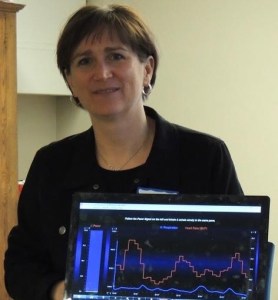
During a Biofeedback Training Session, electrodes and/or finger sensors are attached to the patient’s skin which send signals to a computer screen that displays information and images about the patient’s body functions and stress responses.

To measure how the brain and nervous system manage stress, Biofeedback Training monitors:

  • Skin Conductance
  • Temperature
  • Muscle Activity
  • Respiratory Rate
  • Heart Rate Variability

When under stress, these body functions change (for example, temperature rises, muscles tighten, breathing quickens, heart rate speeds up, etc.). Sweating, jaw clenching and/or tight neck muscles as well as shallow, fast breathing and/or elevated heart rate are all common signs of stress. During a Biofeedback Training Session, the patient can see stress responses reflected on a computer screen as they happen and then get immediate feedback as they try to stop and reverse them.

A baseline assessment helps identify stress levels and triggers in order to set treatment goals. (For example, a possible goal might be an ideal breath rate of about 6-10 breaths per minute whereas most people average about 10-15 breaths or more per minute). Each patient is unique, so treatment is tailored to the individual’s specific needs.  Generally, patients receive about 3-6 training sessions.

Biofeedback Training can help the patient break negative habits (for example, poor posture or breathing patterns) and equip them to better tolerate and recover from stressors (for example, stimulus or activity that taxes the nervous system and increases vestibular symptoms).  The ultimate goal is for the patient to learn to integrate biofeedback techniques into their daily life as a way of better self-managing stress and/or anxiety and vestibular symptoms.

*To practice Biofeedback Training on your own, try the “Breathe 2 Relax” application. (Set the breathing pace to 5 seconds inhale and 5 seconds exhale). Consider using for relaxation before bed.

Ways Biofeedback Therapy Can Help

Biofeedback Therapy can be an effective treatment for vestibular disorders when used in conjunction with Vestibular Rehabilitation Therapy (VRT).  It is especially beneficial for patients experiencing therapy plateaus or patients with complex vestibular issues which are impacting the nervous system.

Possible Benefits of Biofeedback Therapy:

  • Help with anxiety-dizziness cycle
  • Decrease migraines
  • Increase mobility (by integrating into VRT movement exercises)
  • Improve nervous system control to open pathways for compensation
  • Improve aspects of physical functioning that impair compensation (for example, sleep better)

More Information About Biofeedback:

Overview of Biofeedback: Uses & Benefits

Lisa Eaton, DPT, OCS

of Cascade Dizziness & Balance PT

Lisa has over 12 years of experience as a physical therapist. In 2001, she received a Doctorate in Physical Therapy (DPT) with highest honors from Creighton University. Lisa has always had a passion for treating vestibular and balance problems.In 2006, Lisa completed the highest certification for vestibular rehabilitation available for physical therapists (“Herdman certified”) at Emory University. Since that time, she has continued to advance her practice through continuing education and self-study. In 2007, Lisa received her Orthopedic Certified Specialist (OCS) designation from the American Physical Therapy Association. Her knowledge and experience with orthopedic problems is an important part of her balance and vestibular practice. Dizziness and balance problems can have musculoskeletal components that need to be addressed to treat the whole patient.

“The vestibular system and the brain are fascinating. I love teaching my patients how to turn these systems around and improve their movement and enjoyment of activities.” – Lisa Eaton

http://www.cascade-dizziness.com

*******

Presentation information is not meant to be taken as medical advice.

Presentations posted online may include discussion notes, links, images, and other information added by Seattle Dizzy Group.

*******

© Copyright 2015, Seattle Dizzy Group. All rights reserved.

Posted by: seattledizzygroup | November 30, 2015

Holiday Tips

Holiday Tips

The challenges of living with a vestibular or balance disorder can increase holiday stress and fatigue.  These articles offer ways to survive and enjoy the holiday season with a chronic illness:

Tips for Surviving the Holidays with Joy and Peace

How to Enjoy Holiday Traditions When Chronically Ill

Surviving the Holidays When You’re Chronically Ill

Ways to Make the Holidays Easier When You’re a Spoonie

Holiday Survival Tips from Chronic Illness Warriors

When Poor Health and Holidays Collide

Educating Loved Ones about Your Health During the Holidays

Things I Wish People Knew about Being Chronically Ill During the Holidays

Hearing Loss and the Holidays

Keep Loved Ones with Hearing Loss Close this Holiday Season

Stress, Depression and the Holidays: Tips for Coping

Traveling with Dizziness

The Spoon Theory

Happy Holidays!

© Copyright 2015, Seattle Dizzy Group. All rights reserved.

Post updated December 2015

Posted by: seattledizzygroup | October 31, 2015

Understanding Invisible Illness

“Invisible” Illness Isn’t Really Invisible If You Look Closely Enough

Nearly 1 in 2 people have a chronic health condition in the U.S. and about 96% of those people are suffering silently with an “invisible” illness (that does not have obvious visible signs).  For example, about 74% of Americans with severe impairments do not use a wheelchair, cane, crutches, or walker. (For more information, see:  www.invisibledisabilities.org and www.invisibleillnessweek.com).

Unfortunately, people living with an “invisible” illness such as a disabling vestibular or balance disorder are often misunderstood and stigmatized by society, including being derogatorily perceived as not sick, overreacting, exaggerating or faking symptoms, lazy, drunk, unintelligent, etc.  Though not always obvious to the onlooker, “invisible” symptoms of chronic vestibular dysfunction such as dizziness, imbalance, and fatigue may greatly limit a person’s day-to-day activity and negatively impact their overall quality of life.  For example, debilitating vestibular symptoms can significantly decrease the ability of a person to perform activities of daily living (such as bathing, dressing, or simply getting around inside the home) or to participate in social activity. (For more information, see: http://vestibular.org/understanding-vestibular-disorder).

Too frequently, people judge someone with an “invisible” illness by only a quick, superficial glimpse and make incorrect, negative assumptions. However, to truly understand the challenges and impacts of an “invisible” illness, you need to walk alongside someone and take care to notice how deeply their life has been changed as a result.  With closer observation, you can see that someone suffering from a disabling condition is faced with having to adapt to a “new normal” with many health struggles and various life-altering limitations.

It is important not to make someone with an “invisible” illness feel like they need to prove to you the degree of their impairment.  Regardless of your personal perception or feelings, one of the best things that you can say to support someone with an “invisible” chronic illness is simply “I believe you.”

These articles offer valuable insight regarding “invisible” illness as well as helpful tips for living with chronic illness and suggestions for loved ones:

Invisible Illness or Chronic Illness? What’s the Difference?

What is an Invisible Disability?

10 Ways to Make Your Invisible Illness Visible

Chronic Illness Facts

20 Tips for Living Well with Chronic Pain and Illness

14 Tips from 14 Years Sick

9 Things I’ve Learned Through 20 Years of Chronic Illness

7 Ways to Cope with Chronic Illness

Impact of Chronic Illness Upon Relationships and Social Activity

How to Cope with Unsolicited Advice When You Have an Invisible Chronic Illness

What Those with Chronic Pain or Illness DO Want to Hear

10 Things You Should Say to Someone with A Chronic Illness

15 Things Not to Say to Someone With A Chronic Illness or Invisible Illness

What Those with Chronic Pain or Illness DON’T Want to Hear

Part 2: What the Chronically Ill DON’T Want to Hear

The Spoon Theory

Help Raise Awareness for “Invisible” Illness

Invisible Illness Awareness Week

Invisible Disabilities Week

#InvisibleNoMore 

© Copyright 2015, Seattle Dizzy Group. All rights reserved.

Posted by: seattledizzygroup | September 20, 2015

Making a Difference for Balance Awareness

Together We Are Making A Difference!

Every September, the Vestibular Disorders Association (VEDA) hosts Balance Awareness Week to “Defeat Dizziness” with a goal of reducing the time it takes to diagnose a vestibular disorder by increasing awareness.

Though an estimated 35% of US adults aged 40 years and older (69 million Americans) have experienced vestibular dysfunction at some point in their lives, chronic vestibular disorders are quite difficult to diagnose.  Currently, a patient may need to consult as many as  four or five doctors over a period of several years to receive an accurate vestibular diagnosis.  Unfortunately, even with a diagnosis, there is no “cure” for most vestibular disorders and usually patients must adapt to a “new normal” with many health challenges and various life-altering limitations.  Additionally, people living with a chronic vestibular disorder are often misunderstood and stigmatized by society as having an “invisible” illness which may cause them to be negatively perceived as not sick, overreacting, exaggerating or faking symptoms, lazy, drunk, unintelligent, etc.  (For more information, see: www.vestibular.org).

While there is still much awareness that needs to be raised for vestibular and balance disorders, together we are making a difference.  It is very encouraging that there is now substantially more information and support available for people suffering from vestibular and balance disorders than there was just a decade ago.

Since our founding in 2006, Seattle Dizzy Group has been committed to supporting people living with chronic dizziness and imbalance including being a part of helping to make a difference during Balance Awareness Week. Seattle Dizzy Group has served as an inspiration and model for expanded Balance Awareness Week activities and events across the nation and beyond.

Over the years, Seattle Dizzy Group has participated in Balance Awareness Week with online and email awareness campaigns as well as contacting Congress regarding the challenges of living with a chronic vestibular or balance disorder (including the difficulty of being approved for Social Security disability benefits).  We have also hosted guest speakers on balance-related topics during Balance Awareness Week.

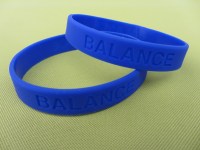
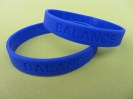
In 2011, Seattle Dizzy Group increased our efforts to raise awareness and came up with the idea to create Balance Awareness Wristbands.  At that point in time there was no official awareness color for vestibular and balance disorders, so our group voted and chose a royal blue color. Since then, we have been encouraging everyone to “Wear Blue for Balance.” (We’re excited that our Seattle Dizzy Group phrase has caught on and we’re seeing more and more online posts from around the world echoing “Wear Blue for Balance”). As for the BALANCE Wristbands we created, we send them to people worldwide who wear them with a sense of solidarity with others seeking balance.  We also encourage friends and family to wear our BALANCE Wristbands as a great, fashionable way to show they care. (Get a free BALANCE Wristband with a donation to Seattle Dizzy Group! www.seattledizzygroup.org/balance-wristbands).

Additionally in 2011, Seattle Dizzy Group started celebrating Balance Awareness Week with an annual walk in order to help create greater awareness for vestibular and balance disorders and show our support for people living with chronic dizziness and imbalance–in Seattle and beyond. We strive to grow and improve our Walk for Balance Event each year with increased community involvement.

Our 2013 Walk for Balance Event was mentioned in a King5 news article featuring our guest speaker Julie Grove MPT and the unique balance training environment she offers at Cascade Dizziness and Balance PT.

Last year, Seattle Dizzy Group chose “Walk a Mile in Dizzy Shoes” as the slogan for our one-mile awareness walk and we added to our Walk for Balance Event an Information Fair sponsored by local health and balance support providers.


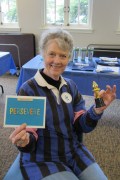
This year Seattle Dizzy Group hosted our Fifth Annual Walk for Balance Event on Saturday, September 19th (www.seattledizzygroup.org/walk-for-balance).  We had a fun time and increased our impact during our walk at Green Lake by wearing blue, Seattle Dizzy Group gear, and Walk for Balance badge stickers as well as carrying balloons and balance awareness signs. (We were stopped numerous times on our walk by people who are also struggling with chronic dizziness and imbalance or who know someone with a vestibular or balance disorder. We were glad to have the opportunity to provide helpful information and connect others in our community with local balance support resources including inviting them to join Seattle Dizzy Group at an upcoming meeting). After walking together, we honored event participants with our first annual Dizzy Spirit Awards (for Wearing the Most Blue for Balance, Best Use of Walking Aids, Most Dizzy Group Spirit, and Perseverance, etc.). We have received very positive feedback from event participants and we are already looking forward to Balance Awareness Week 2016 and our Sixth Annual Walk for Balance Event!

Seattle Dizzy Group is so glad to have contributed to raising balance awareness over the years.  It is wonderful to see the progress that has been made in support of people living with chronic dizziness and imbalance! Please join us in continuing to create greater awareness for vestibular and balance disorders beyond Balance Awareness Week.   Together we can continue to make a difference!

Information to share with others:

Top Ten Facts About Vestibular Disorders

Raise Balance Awareness

Balance Awareness Facts, Figures & Trivia

To learn more about vestibular & balance disorders, visit: www.vestibular.org

© Copyright 2015, Seattle Dizzy Group. All rights reserved.

Posted by: seattledizzygroup | August 31, 2015

Help Raise Awareness and Show Your Support

Save These Dates to Help Raise Awareness & Show Your Support in September!

September 14-20, 2015 is Balance Awareness Week!

The goal of the Vestibular Disorders Association (VEDA) for Balance Awareness Week is to “Defeat Dizziness” by reducing the time it takes to diagnose a vestibular disorder. This is a great opportunity to help raise awareness for vestibular and balance disorders and show your support for people living with chronic dizziness and imbalance. 

Helpful information to share with others:

Raise Balance Awareness

Balance Awareness Facts, Figures & Trivia

To learn more about vestibular and balance disorders, visit: www.vestibular.org


Celebrate Balance Awareness Week with Seattle Dizzy Group!

Join us for our  Fifth Annual Walk for Balance Event on Saturday, September 19, 2015 at Green Lake. Come support a good cause, meet great people, and “Walk a Mile in Dizzy Shoes” with us!

Event details:  www.seattledizzygroup.org/walk-for-balance


Wear Blue for Balance! Gear Up to Show Your Support:  https://seattledizzygroup.org/show-your-support


September 28-October 4, 2015 is Invisible Illness Awareness Week!

Nearly 1 in 2 people have a chronic condition in the U.S. and about 96% of those people are suffering silently with an “invisible” illness (that does not have obvious visible signs of illness).  Unfortunately, people living with an “invisible” chronic illness such as a vestibular or balance disorder are often misunderstood and stigmatized by society, including being negatively perceived as not sick, exaggerating, lazy, drunk, unintelligent, etc.  Get involved to help make a difference!

Chronic Illness Facts

10 Ways to Make Your Invisible Illness Visible

3 Challenges of Being An Illness Advocate 

More info:  www.invisibleillnessweek.com

Walk for Balance TM

© Copyright 2015, Seattle Dizzy Group. All rights reserved.


Posted by: seattledizzygroup | July 31, 2015

Summer Survival Strategies

Enjoy Summer While Living with Chronic Illness

Summertime can be a challenging season for those living with a chronic illness such as a vestibular or balance disorder.

Here are some strategies to make the most of the short summer months while living with a chronic illness:

9 Summer Survival Tools When You Have a Chronic Illness

How to Survive the Summer Heat with Chronic Illness

6 Easy Tips for Protecting Your Hearing this Summer

Ways to Combat Motion Sickness

 Traveling with Dizziness (Adventures in “Dizzyland”)


© Copyright 2015, Seattle Dizzy Group. All rights reserved.

Post Updated July 2019.

Posted by: seattledizzygroup | June 30, 2015

Impact of Chronic Illness upon Relationships and Social Activity

Ways to Maintain Healthy Relationships & Social Activity Despite the Challenges of Living with Chronic Illness

Chronic illness impacts every aspect of life, including relationships and social activity.  The unpredictability of symptoms and fatigue makes it especially difficult to stay social.  Friends, family, partners, caregivers, etc. must also adjust to a “new normal” as they walk alongside someone with a chronic illness.  At a recent support group meeting, we discussed ways to maintain healthy, supportive, and fulfilling relationships with loved ones despite the challenges of living with a chronic vestibular or balance disorder.

These articles offer valuable insight and helpful tips for the chronically ill as well as suggestions for loved ones and caregivers:

How to Cope When Chronic Pain (Illness) Affects Friends, Family & Social Life

7 Ways to Keep Your Relationship Strong Despite a Chronic Illness

Supporting Relationships Through Chronic Illness

3 Things the Chronically Ill Wish Their Loved Ones Knew

Free eBook: Chronic Illness & Friendship

Chronic Illness and Friendship Resources (Click to download PDF)

52 Ways to Encourage a Chronically Ill Friend (Click to download PDF)

How to Help a Sick Friend (Click to download PDF)

What Those with Chronic Pain or Illness DO Want to Hear

10 Things You Should Say to Someone with A Chronic Illness

15 Things Not to Say to Someone With A Chronic Illness or Invisible Illness

What Those with Chronic Pain or Illness DON’T Want to Hear

Part 2: What the Chronically Ill DON”T Want to Hear

How to Help Your Caregiver

A Not-To-Do List for Caregivers of the Chronically Ill

The Spoon Theory


© Copyright 2015, Seattle Dizzy Group. All rights reserved.

Posted by: seattledizzygroup | May 31, 2015

Acupuncture and Acupressure Therapy

Acupuncture & Acupressure Therapy for Vestibular Disorders

by Steve Knobler, LAc

of North Seattle Community Acupuncture

(Presented to Seattle Dizzy Group on 5/9/15)

This presentation gives an overview of Acupuncture Therapy including how it works and how it can help as well as Acupressure techniques to try at home.  Learn about this complementary therapy for managing the symptoms of a chronic vestibular (inner ear) or balance disorder.

How Acupuncture Therapy Works

Acupuncture has been practiced for thousands of years.  It helps reduce stress, improve energy, and restore balance.  Acupuncture provides effective therapeutic relief for many health conditions including migraines, dizziness, depression and anxiety.

During a treatment, acupuncture needles are inserted into specific points on the body. The needles are hair-fine and solid, different than the hollow hypodermic needles used for injections. Usually, a person feels nothing at all or only a slight, mild ache or pinch. Most people find the experience very pleasant and relaxing, often falling asleep during treatment.

What Can Chinese Medicine Treat Concerning Vestibular Disorders?

Most Treatable Conditions

  • Fluid Imbalance/Insufficiency
  • Pathogenic Causes (Viruses & Infections)

*Acupuncture cannot effectively treat certain types of vestibular or balance disorders.  For example, Particle Repositioning Maneuvers are necessary for the treatment of Benign Paroxysmal Positional Vertigo.*

Symptoms

  • Nausea & Vomiting
  • Dizziness
  • Imbalance
  • Migraines
  • Depression & Anxiety
  • Stress

Chinese Medicine Associates Vestibular Disorders with Phlegm.

All of the above symptoms can occur if fluid moves poorly within the ear or anywhere else in the body.

  • A good analogy is making soup. It becomes too thick and phlegmy if you:
    • Don’t have enough stock
    • Overcook it
    • Use incorrect ingredients
  • The Goal: Correct the Cooking Problem
    • Clear the phlegm. Then…
    • Add more water
    • Reduce heat
    • Change ingredients (change diet)

What Tools Does Chinese Medicine Use to Help Vestibular Problems?

  • Acupuncture (pretty helpful)
  • Acupressure (moderately helpful)
  • Herbs (very helpful)
  • Massage (pretty helpful)
  • Lifestyle (can be very helpful)
    • Food
    • Exercise
    • Meditation

(Acupuncture information and images from http://www.northseaforme.com)

Acupressure Therapy

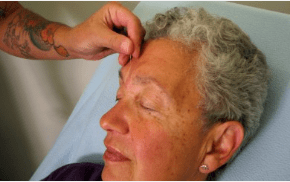
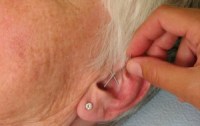
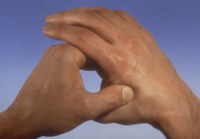
Acupressure is an ancient healing art developed in Asia over 5,000 years ago which uses the fingers to press key healing points that stimulate the body’s natural self-curative abilities. Using the power and sensitivity of the hand, acupressure therapy is effective in the relief of stress-related ailments, and is ideal for self-treatment and preventive health care for boosting the immune system. Acupressure releases tension, increases circulation, reduces pain, and detoxifies the body for more vibrant health.

Acupuncture and acupressure use the same pressure points and meridians.  For a pressure point reference, see the book “Acupressure Potent Points” by Micheal Reed Gach, PhD.

(Acupressure information and image from http://www.acupressure.com)

Acupressure Techniques

Guidelines:

  • Use moderate, circular pressure for 5 minutes.
  • Never be abrupt, forceful, or jarring.
  • Use abdominal points cautiously, especially with pregnancy or disease.
  • Don’t press heavily on lymph areas.
  • Do not massage burns, infections, ulcers, or new scars.

Acupressure Techniques Handout by Steve Knobler LAc (Click to Download PDF)

A Little Advice

Best Herbal Advice: Always consult an acupuncturist/herbalist before taking anything.

Best Dietary Advice: Minimize sugar, raw food, cold food, and dairy.

Best Exercise Advice: Move often and make it comfortable.

More Information:

7 Acupuncture Points That Can Save Your Life This Spring

Acupuncture Effective for Treating Hearing Loss

Acupuncture and Parkinson’s Disease (Click to Download PDF)

Steve Knobler, LAc

of North Seattle Community Acupuncture

Steve is a Licensed Acupuncturist who graduated from NIAOM in 1999. He is nationally board certified (NCCAOM) and has post-graduate training in orthopedic and sports acupuncture with Dr. Whitfield Reaves of Colorado. Steve enjoys treating everything, but his focus is treating people who are injured, pre/post surgical, with structural challenges or who desire improved physical performance.

http://www.northseaforme.com

*******

Presentation information is not meant to be taken as medical advice.

Presentations posted online may include discussion notes, links, images, and other information added by Seattle Dizzy Group.

*******

© Copyright 2015, Seattle Dizzy Group. All rights reserved.

« Newer Posts - Older Posts »

Categories

Seattle Dizzy Group

Providing support & community for people living with chronic dizziness & imbalance -- in Seattle & beyond