Posted by: seattledizzygroup | December 31, 2013

Improve Balance With Chiropractic Therapy

Dr, Sarah Deam DC

Chiropractic Therapy & Balance

by Dr. Sarah Deam, DC

of Westlake Chiropractic and Integrative Health Center

(Presented to Seattle Dizzy Group 11/2/13)

This presentation discusses how chiropractic therapy can help with the management of vestibular/balance dysfunction.  Dr. Deam gives an overview of chiropractic therapy, including basic anatomy of the spine as well as how and why adjustments are made.  She explains how misalignments of the upper cervical region, jaw, and feet contribute to balance issues, and she also offers tips for better balance, including addressing fallen arches, the importance of wearing supportive shoes, and how to stretch properly.

Overview of Chiropractic Therapy

I.  Development of Chiropractic Therapy

  • Developed from the Greek words “Cheir” and “Praktos” (“done by hand”).
  • Earliest indication of spinal “manipulation” was documented in an ancient Chinese manuscript, dated 2700BC.
  • Over 100 years ago, DD Palmer, energy healer, evaluated his patient, Harvey Lillard who had insidiously lost his hearing following a back injury.  DD found a region of Harvey’s back where there was a protruding and poorly aligned region and applied pressure to the spine in an attempt to realign the region.  In the days following the treatment, Harvey noted improved hearing.
  • DD named the therapeutic technique “Chiropractic”.  DD’s son, BJ furthered Chiropractic and the first school, Palmer College of Chiropractic was opened in Davenport, Iowa.

II.  What is “Chiropractic”?  What is a “Chiropractor”? 

  • Chiropractic is the practice of detecting and correcting “Vertebral Subluxations”  (poorly aligned spinal vertebrae, in relation to the regions above and below” that cause abnormal irritation to the spinal nerves that exit these vertebrae and ultimately abnormal function of the nerves and nervous system).  *If this doesn’t make sense, see Spinal Anatomy below*
  • Chiropractors examine and locate these “subluxations” and utilize a variety of techniques, with the most common technique being “Spinal Manipulation” to correct these subluxations to restore proper motion and alignment, and thus decrease the irritation to the nerves to restore diminished nervous system function.  Since the nervous system controls the immune system, this ultimately will allow the patient’s own natural defenses to function optimally.
  • For some, a Chiropractor is a first contact physician as Chiropractors possess the ability to evaluate patients, diagnose the patient to the best of their ability and determine if the patient is amenable to Chiropractic management or require referral to another capable practitioner.
  • Once under Chiropractic treatment and management, Chiropractors provide spinal manipulations and sometimes other therapeutic modalities (i.e. ultrasound, electrical stimulation, manual muscle therapies) and advise patients on proper nutrition, exercise, and lifestyle modifications.

A Chiropractor treats disorders related to the nervous system, primarily by making adjustments to the spine, but also through physical therapy to the spine, lifestyle counseling, and dietary recommendations. 

III.  Spinal Anatomy (with vocabulary definitions)

  • Vertebral Column-Back bone or spine
  • Vertebrae-individual bones of the spine
    • Cervical-neck (Atlas-upper cervical-IMPORTANT!!)
    • Thoracic-mid back
    • Lumbar-low back
  • Pelvis (Sacroiliac Joints and Sacrum-pelvic bowl) (THE FOUNDATION)
  • Joint-Regions where vertebrae “articulate” or join and where movement occurs.
  • Intervertebral Disc-Fibrocartilage/Fluid containing.  In between each vertebra.  Allows for space between vertebrae and movement to occur between joints.  Subject to degenerate change causing motion loss in spine.
  • Brain Stem and Spinal Cord, Spinal Nerves (Nervous System)-includes the Sensory organs.  The Nervous System is the most important system in the body.  It controls EVERYTHING!  Including the Immune System.  The vertebral column and vertebrae are the conduit for the Nervous System.  (If the vertebrae are misaligned, causing the vertebral column to lose its proper shape, it affects the spinal nerves and ultimately the function of the Nervous System).
  • TMJ-Temporomandibular Joint (AKA Jaw)
  • Jaw and upper Cervical region.  This region is intricate and located very close to the inner ear anatomy.

Impact of Misalignments Upon Balance

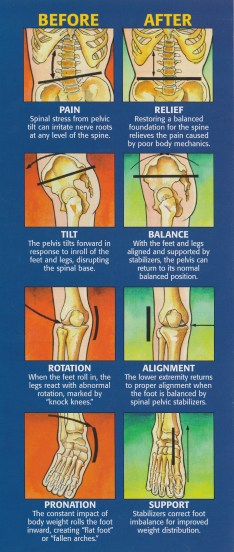
    • Arches “dropped” (can be caused by foot/ankle subluxation)
    • Toe out
    • Knees valgus (“knock knee”)
    • Hip rotated
    • Pelvic un-leveling
    • Spine curvature (spinal misalignments/distorted motion and nerve irritation)
    • Eye un-leveling and Head tilt (likely)
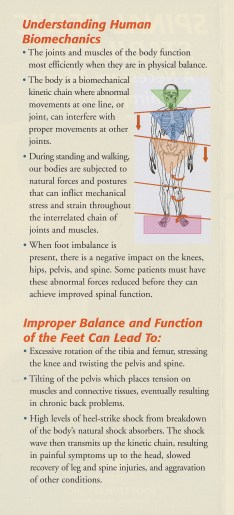
Understanding Human Biomechanics - Dr Sarah Deam PresentationBefore and After Misalignment - Dr Sarah Deam Presentation

*Imagine what affect misalignment of the upper cervical vertebrae (causing head tilt) would have on inner ear function* 

*Imagine what misalignment of the jaw, which typically causes or corresponds with misaligned upper cervical vertebrae, would do to balance*

***A distorted walking gait and head tilt will lead to balance issues and cause, contribute to, or complicate balance disorders!***

Maintain Structural Alignment & Balance

  1. Get evaluated by a Chiropractor.  Find out if you have any spinal misalignment issues that may be causing or at least contributing to that condition that you are suffering from, whether it is pain, headaches, immune function issues, or a vestibular/balance disorder.
  2. Get adjusted by a qualified Chiropractor.  There are LOTS of different techniques.  Some high velocity and done by hands and some very light and gentle.  Figure out your comfort level and communicate that to your Chiropractor of choice.  They are all effective.
  3. Support your feet properly.  Wear good shoes.  Brands of shoes that have a wider base (provide better balance):  Brooks, New Balance, Asics, and Saucony.  You may wish to try a shoe insole for better arch support (for example, SuperFeet).  Possible evaluation by a podiatrist.
  4. Stretch/Strengthen supportive and connected muscle tissue.  All have connections to the spine whether directly or indirectly.  Stretch slowly and gently.  Massage to reduce muscle spasms.  For muscle cramps try:  epson salt baths, magnesium supplements, tonic water, drinks with electrolytes.  Consult with a Physical Therapist if you have any complicating factors such as previous injuries or significant strength loss issues.
  5. Stay hydrated!  We are mostly water.  We need water for our organs to function properly, our muscles to properly contract and relax, and for the proper health of the spine. (Discs are composed mainly of water and that’s what gives us our height and allows for proper range of motion, ultimately supporting the alignment of our spine and health of our nervous system).  Water is also a natural muscle relaxer.
  6. Good diet.  Seek help from a qualified nutritionist if necessary.  You may wish to try an Anti-inflammatory Diet or take a supplement to help reduce inflammation (for example, Wobenzym is a natural anti-inflammatory).
  7. Complimentary therapies to Chiropractic include Craniosacral Therapy and Massage Therapy.

STRETCH PROPERLY:

  • Neck Stretches (may be optional for some) (See examples)
  • Nerve Glide Exercises (See examples)
  • Pin and Stretch Exercises (See examples)
  • Headache points/trigger points for supportive muscles of the neck (See below)

*Stretch slowly and gently*

**Don’t stretch spasming muscles.  Instead, massage to reduce spasming**
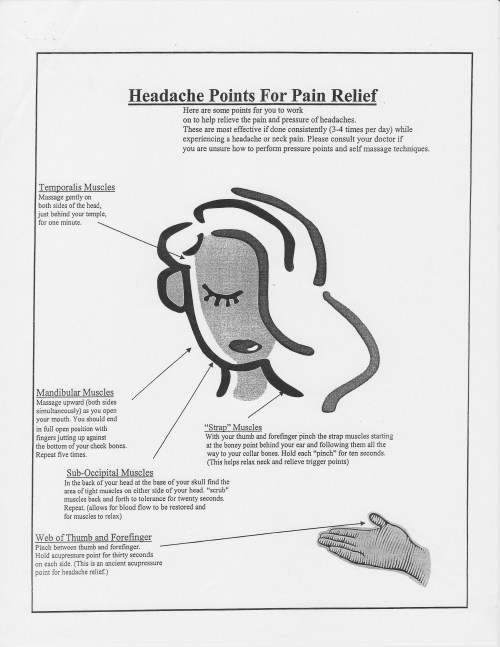
Headache Points for Pain Relief - Dr Sarah Deam

Dr Deam DC

Dr. Sarah Deam, DC

of Westlake Chiropractic and Integrative Health Care Center

Dr. Sarah Deam graduated from Radford University in Radford, Virginia with a Bachelor of Science in Sports Medicine and Palmer College of Chiropractic in Davenport, Iowa with a Doctor of Chiropractic degree. She has practiced Chiropractic in the Greater Seattle area for 5 years.

Dr. Deam’s approach to patient care is holistic, focusing on the patient as a whole, but also specifically addressing their pain or health-related complaints using a variety of manual, instrumental and soft tissue techniques. She focuses on postural care and correction and instructs her patients on proper core strength training exercises and stretching to encourage more long-standing permanent results.

Dr. Deam enjoys working with patients of all ages and has advanced education in Chiropractic for Pregnant and Pediatric patients and Healthy Aging.  In addition, her wide range of experience includes the treatment and management of Scoliosis, disc injuries and radicular pain, personal injury and work-related injury claims.

More information about Dr. Sarah Deam, DC:  http://westlakedc.com/blog/dr_deam/

Understanding Human Biomechanics & Correcting Misalignment/Improving Balance illustrations taken from Foot Levelers, Inc. pamphlet (www.footlevelers.com)

*******

Presentation information is not meant to be taken as medical advice.

Presentations posted online may include discussion notes, links, and other information added by Seattle Dizzy Group.

Download Presentation Handout PDF (original without notes):  www.facebook.com/groups/SeattleDizzyGroup/files/

(Join the Seattle Dizzy Group closed/secret Facebook group to download the presentation.  Send us your email address for invitation to join our Facebook group).

*******
Posted by: seattledizzygroup | October 19, 2013

Calm, Cool, and Compensated

Cascade Dizziness and Balance vestibular therapy

Calm, Cool, and Compensated

by Julie Grove, MPT

of Cascade Dizziness and Balance PT

(Presented to Seattle Dizzy Group 9/21/13)

This presentation discusses the role of vestibular rehabilitation for treating symptoms of dizziness, vertigo, disequilibrium, nausea, and anxiety.  The tenets of vestibular rehabilitation and balance physical therapy are reviewed including evaluation, treatment, prognosis, barriers to treatment, and facilitators for recovery.  Concepts of central compensation are explained including functional vs. physiological compensation, de-compensation, and failure to compensate related to inner ear dysfunction.

Compensated

Brain Compensation is the dynamic process of the central nervous system responding and “re-wiring” after a vestibular injury/trauma/onset. These phases are in acute and long-term time frames.

Acute Compensation refers to the cerebellum shutting down or inhibiting the severe neuronal asymmetrical inputs from a damaged vestibular system relative to a normally functioning one.

Long-Term Compensation refers to the process of neurophysiological changes at the vestibular nuclei in the brainstem and how the labyrinthine inputs are recalibrated to reduce the asymmetry of responses (decrease mixed signals/sensory mismatch).

Vestibular Rehabilitation Therapy (VRT) is a specialized type of therapy which uses the active movements of head, eye, and body motion to help restore central compensation and optimize function.

There are two types of Compensation used in VRT:

1. Vestibular Adaptation Exercises

– Used with an intact cerebellum/brain that learns with practice

– Used with stable, not progressive vestibular dysfunction

– Used for bilateral (both) vestibular dysfunction with some residual vestibular function

– Facilitated by exercises used to “force” the use of the remaining vestibular inputs and recalibrate the system through firing changes at the brainstem (vestibular nuclei):

• Eye-head coordination exercises

• Progressive balance re-training

• Dynamic gait activities

• Simple to complex tasks

Strategies:

Mental Imagery (visualize/imagine success)

Error Signal Generation (make adjustments to compensate for errors)

Internalization of Movement (cognitive, intentional, self-correcting)

Practice Functional Tasks (apply therapy to day-to-day tasks)

Goal:

Stair-step gradual improvements

2. Substitution

– Used with vestibular problems which are permanent and not able to learn or change over time

– Used with progressive neurological dysfunction

– Used with complete loss of vestibular system bilaterally

Strategies:

Use of trekking poles, canes, walkers

Use of additional lighting, visual markers

Use of alternative sensory inputs: pressure, vibration, touch

Goal:

Strengthen body systems capable of compensation and optimize environment by using balance aids and increasing awareness through visual cues and touch/sensor cues (proprioception).

De-Compensation

Refers to the Central Nervous System’s inability to maintain a compensated state when resources are inadequate to meet the demands of the systems when stressed/injured/deprived.  (Regression after having improved from Vestibular Rehabilitation Therapy).

Possible triggers/causes of De-Compensation:

– Elevated life stressors

– Poor sleep, disrupted sleep

– Sickness, illness, new injury:

• Diagnosis of diabetes, poorly controlled

• Visual impairment

• One-sided vestibular problem becomes a two-sided problem

• Head injury

• Neck/spinal whiplash

• Fluctuating vestibular or central disorders:

· Meniere’s disease

· Migraine related vertigo/dizziness

· Growing acoustic neuroma

· Perilymphatic fistula or canal dehiscence

Prevention Strategies:

Recognize the fragile state of compensation achieved by Vestibular Rehabilitation Therapy and minimize the risk of de-compensation by modifying lifestyle, reducing stress, and managing fatigue.

Measuring Compensation is discussed in two ways:

1. Physiologic compensation

= vestibular ocular responses (and central responses) measured on rotary chair

2. Functional compensation

= the combined objective and subjective responses of the patient with a diagnosed vestibulopathy including changes in scores on:

• Dizziness handicap inventory

• Activities Balance Confidence Scale

• Vestibular ADL questionnaire

• Static balance measures

• Dynamic gait tests

• Dynamic visual acuity tests

• Gaze stabilization tests

• Quantitative analysis of nystagmus (involuntary eye movement) at rest and after headshake test in video infra-red goggles (IRV).

Cool

Heat and warmth can increase sensations of nausea.

When dizziness, vertigo, anxiety, or nausea/vomiting occur quickly apply cold towels to neck/head.

Move to a cool space, if safe, or feel the tactile (touch) receptors against a building wall.

Use cool/cold sensations to distract you (your brain) from the strong feelings of nausea.

Use natural anti-nausea foods: ginger and peppermint.

Reduce your body’s autonomic nervous system reactionary fight/flight to nausea/dizziness.

Calm

Using diaphragmatic breathing as a first response to a “perceived threat” to the system. Belly breathing that does not induce exertional dizziness. (Breathe in through nose and out through mouth). Use to oxygenate the body and calm the central nervous system.

Identify the fight/flight response and whether it is the brain anticipating vertigo or dizziness.

Identify the fight/flight response and whether it is a sensation of anxiety or panic.

Re-frame the sensation or response to identify the brain’s negativity bias.

Use positive coping strategies and affirming self-talk reiterating ideas of your resilience, strengths, independence, “mental toughness,” belief in oneself, or self efficacy.  (For example, “l am a fighter”).

Use mental imagery or visualization to imagine yourself performing ANY task at your best performance and highest quality.

Reinforce to yourself that a positive outlook equates to a positive outcome.

Pace yourself to allow for optimal energy usage and conservation. Reduce unneeded stressors.

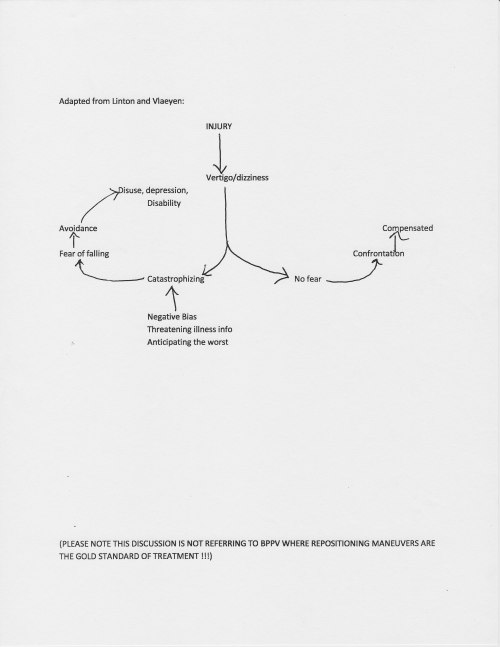
    Potential Impacts of Positive or Negative Thoughts/Outlook   on Compensation:

Compensation Prognosis - Julie Grove presentation

Julie Grove, MPT

of Cascade Dizziness and Balance PT

Julie Grove MPT (new)Julie graduated with her Masters in Physical Therapy from California State University Fresno in 1997.  Since 1999, Julie has practiced in the specialized field of vestibular and balance rehabilitation, an area of physical therapy she is deeply passionate about. She has extensive training and experience in this field, exclusively treating patients with dizziness, vertigo, disequilibrium, and fall risk for over 14 years.

Julie completed the Herdman Vestibular Competency course in 2002, considered the “gold standard” of vestibular excellence in the balance community. In addition, she successfully completed the Vestibular Function Test Interpretation and Application to Rehabilitation in July 2004. She has continued her pursuit of understanding the neuroanatomy and neurophysiology of the central and vestibular systems by attending national conferences, regional case study rounds, and reviewing literature. Currently, Julie serves on the Vestibular Special Interest group committee for developing the “Clinical Practice Guidelines on Peripheral Vestibular Hypofunction.”

“When a trauma, virus, autoimmune disorder attacks the inner ear, your world will be turned upside down, literally, but treatment is available when a team approach is utilized for diagnostics, management, and rehabilitation.”

In addition to starting three regional balance programs, Julie also helped initiate a local support group for those suffering from dizziness. She has instructed students of physical therapy, audiology, and occupational therapy as well as various physician groups in the core aspects of vestibular rehabilitation.  Julie enjoys “cutting edge” vestibular and balance research and recently participated in the BrainPort clinical trials as principal investigator.

“Patients need to understand that their seemingly unusual symptoms of blurred vision, fatigue, elevated fight/flight sensations, and dizziness are all part of the expected symptoms of the invisible problem that can be a vestibular or central dysfunction.”

In her spare time, Julie enjoys recreating outside be it kayaking in the San Juan Islands, jogging Seward Park, waterskiing, playing touch rugby, snow skiing, or walking. She has coached kids athletics as well as “Girls on the Run” and is a member of Feet First, a Seattle based pedestrian safety advocacy group. She would love to see more kids walking and biking outdoors safely!

Memberships:
  • American Physical Therapy Association
    • Neurology Sections
    • Vestibular Special Interest Group
    • Balance and Falls Special Interest Group
  • Vestibular Disorders Association

http://cascade-dizziness.com/our-physical-therapists/julie-grove-mpt/

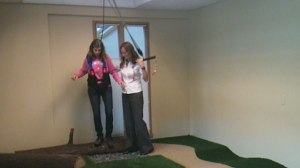
Article featuring Julie Grove MPT and the unique balance training environment she offers at her clinic: http://www.king5.com/health/Vertigo-awareness224326131.html

*******

Presentation information is not meant to be taken as medical advice.

Presentations posted online may include discussion notes, links, and other information added by Seattle Dizzy Group.

Download Presentation Handout PDF (original without notes):  www.facebook.com/groups/SeattleDizzyGroup/files/

(Join the Seattle Dizzy Group closed/secret Facebook group to download the presentation.  Send us your email address for invitation to join our Facebook group).

*******
For more information about Vestibular Rehabilitation Therapy (VRT):

http://vestibular.org/understanding-vestibular-disorder/treatment/treatment-detail-page

http://www.tchain.com/otoneurology/treatment/rehab.html

Posted by: seattledizzygroup | September 19, 2013

Balance Awareness Facts, Figures & Trivia

BAW 2013 photo

September 16-22, 2013 is Balance Awareness Week!

The goal of Balance Awareness Week is to help people recognize the symptoms of a vestibular disorder for a quick diagnosis in order to receive effective treatment.  Find out how you can help make a difference, raise awareness, and support VEDA’s efforts to “Defeat Dizziness” (www.vestibular.org/BAW).

The word “vestibular” refers to the inner ear balance system.  To achieve good physical balance, we rely on our brain, eyes, inner ear, and muscular-skeletal system to work in harmony.  Balance is easily taken for granted. However, when the fragile vestibular organs of the inner ear are damaged by illness or injury anyone can lose the ability to balance.  Learn more at: http://vestibular.org/understanding-vestibular-disorder and http://vestibular.org/understanding-vestibular-disorder/human-balance-system.

How many people have vestibular disorders?

Adult vestibular disorders are typically under diagnosed and undertreated. An estimated 35.4% of US adults aged 40 years and older (109 million Americans) experience vestibular dysfunction at some point in their lives; a percentage of this group develop a chronic vestibular disorder.

What are typical symptoms and signs of a vestibular disorder?

The primary symptoms of a vestibular disorder include dizziness, vertigo, and disequilibrium.

Dizziness is a sensation of lightheadedness, faintness, or unsteadiness.

Vertigo is the perception of movement of the self or surrounding objects and has a rotational, spinning component. Dizziness can be a symptom of many diseases and disorders, but frequent episodes of vertigo —whether lasting only for a few seconds or days on end—are a primary sign of vestibular dysfunction.

Disequilibrium simply means unsteadiness and imbalance that is often accompanied by spatial disorientation. A person with a vestibular disorder may frequently stumble and have difficulty walking straight or turning a corner.

People with vestibular disorders may also be challenged with any of the following possible symptoms:

  • Nausea/vomiting
  • Hearing loss and/or tinnitus (i.e. ringing in the ears)
  • Visual-spatial problems resulting in excessive clumsiness, frequent falls, problems with eye-hand and eye-foot coordination, and difficulty moving in the dark
  • Visual problems (i.e. eyestrain, jumping vision), including difficulty reading (trouble tracking printed text)
  • Cognitive impacts (aka “brain fog”), including difficulty concentrating, memory issues, and impaired mental stamina
  • Increased levels of anxiety
  • Fatigue
How does imbalance affect quality of life?

An estimated 33% of all adults with chronic imbalance experience problems performing basic activities of daily living such as bathing, dressing, and eating. Children with vestibular disorders can face impairments of motor development and balance and learning challenges at school.

Vestibular/balance disorders are an invisible chronic illness. Because these disorders are “invisible,” others frequently assume the patient is overreacting or faking their symptoms.

How do vestibular disorders impact health care systems?

In the US, medical care for patients with chronic balance disorders exceeds $1 billion per year.

An often successful treatment is Vestibular Rehabilitation Therapy (VRT), which has been shown to be an important part of the management of vestibular patients and can help to achieve an improvement of 70-80%.

Trivia

Vincent Van Gogh’s painting “Starry Night” is reportedly a representation of the dizziness he experienced due to Ménière’s disease.

Pop star Janet Jackson suffers from Migraine Associated Vertigo (MAV).

William Shatner was struck with Tinnitus as a result of a special effects blast during the filming of “Star Trek.”

To learn more about vestibular disorders, see VEDA’s Educational Resources:  https://vestibular.org/living-vestibular-disorder/tips-and-tools.

For more information, contact the Vestibular Disorders Association (VEDA) at www.vestibular.org or call (800) 837-8428.

Facts, Figures & Trivia from: https://vestibular.org/sites/default/files/page_files/10%20Talking%20Points%20to%20Share%20for%20Awareness_0.pdf and    https://vestibular.org/sites/default/files/page_files/BAW%2013%20Vestibular%20Facts_0.pdf

Posted by: seattledizzygroup | September 9, 2013

Chronic Illness Facts

National Invisible Chronic Illness Awareness Week is September 9-15, 2013.  Find out how you can help increase awareness and make “invisible” illness more visible to others:  http://invisibleillnessweek.com/.

25 Chronic Illness Facts

1.  Nearly 1 in 2 people (over 100 million people) have a chronic condition in the USA.

2.  About 96% of illnesses are “invisible” with no visible signs of illness.

3.  The significance of one’s faith has shown to help one handle a stressful medical event better.

4.  Sadly, the divorce rate among the chronically ill is over 75%.

5.  About 60% of people with chronic illness are young, between the ages of 18-64.

6.  By 2020, about 157 million Americans will be afflicted by chronic illnesses.

7.  About 90% of seniors have at least one chronic disease and 77% have two or more chronic diseases.

8.  Depression is 15-20% higher for the chronically ill than for the average person.

9.  Sadly, physical illness or uncontrollable physical pain are major factors in up to 70% of suicides.

10.  About one in four adults suffer from a diagnosable mental disorder each year.

11.  Invisible illness includes autism, bulimia, migraine pain, arthritis, bi-polar disorder, and depression, etc.

12.  More people need pain treatment than those with cancer, heart disease, stroke, and diabetes combined.

13.  Less than two hours is spent on pain management in most medical school curriculum.

14.  Most people prefer illness management advice from health professionals before their spouse.

15.  About 19 million people who are severely disabled do not use a wheelchair, cane, crutches, or walker.

16.  About 78% of US health care dollars are spent on people with chronic conditions.

17.  Patients with a deep faith recover faster from depression, even when illness doesn’t improve.

18.  Faith reduces stress, loneliness, pain, and anxiety according to American Cancer Society.

19.  Over half of the chronically ill say the worst thing someone can say is “you look great.”

20.  About 34% of respondents said the person closest to them with a chronic illness is a parent.

21.  Most medical residents leave medical school believing that 80% of patients are addicts seeking drugs.

22.  Over 75% of patients with depression complain of physical pains.

23.  The number of people in the US over 65 years old will double in the next 25 years to 20% of Americans, which will increase chronic illness numbers.

24.  Depression can predispose patients to chronic pain due to the chemical imbalance it creates.

25.  Faith gives people with health challenges peace of mind and will to live.

Facts from: http://invisibleillnessweek.com/2013/08/17/illness/

Posted by: seattledizzygroup | July 31, 2013

Travel Tips for the Dizzy Adventurer

Mexico & Mentoring Potluck photos 2 058

Traveling with Dizziness

(Adventures in “Dizzyland”)

by Cheryl Rowe
Founder/Owner/Director of Seattle Dizzy Group

Helpful strategies for overcoming the challenges of traveling with a vestibular disorder.  Practical suggestions for how to prepare for, make the most of, and recover from travel adventures of all sorts.

(These travel tips have helped members of Seattle Dizzy Group.  You’ll need to find out what works best for you.  Be sure to consult your doctor before taking any medications).

Preparing for a Trip

Pre-Travel Planning Considerations to Set Yourself Up for Success:

  • Compare the costs and benefits of traveling by plane, boat, bus, car, train, etc. as well as exploring on foot.  Choose means of transportation that offer you greater benefits versus health costs.  Some costs to your health may be worthwhile (for example, some temporary discomfort or mild motion sickness), but try to avoid means of transportation that will result in extreme costs to your health that may cause you to be too ill or fatigued to enjoy your trip (for example, avoid travelling long-distance by car or going on a cruise if this sort of travel will result in severe symptoms/motion sickness).  Taking transportation impacts into consideration, you may choose to plan a vacation closer to home or explore on foot when you reach your destination.
  • Consider how the weather conditions of a travel destination may affect you and choose a location that will not aggravate your symptoms.  (For example, if you are sensitive to heat or humidity, choose a destination with milder weather).
  • Know your limits regarding length and pace of travel so that you can avoid overdoing it.  Plan to incorporate rest periods during your trip.
  • When purchasing an airline ticket, consider whether a window or aisle seat will be best for you.  (You may be able to visually stabilize a bit more in a window seat if you can see the ground, but you’ll likely want an aisle seat if you have feelings of being “trapped” or if you are more sensitive to engine noise or vibrations).
  • If you feel anxious that your vestibular symptoms may be too severe to travel as planned, consider purchasing travel insurance for greater flexibility.
  • If you have food sensitivities or dietary restrictions (for example, a low-salt Meniere’s diet), consider a time share or other accommodation with a kitchen.
  • Prepare for your trip by getting a lot of rest.  A few days before your trip, try not to have any big plans or a busy schedule.
  • Create a packing list document so that you won’t forget anything important due to “brain fog.”
  • Pack a travel kit with medications & travel aids so that you can travel as comfortably as possible.

Making the Most of a Trip

Travel Considerations to Manage Symptoms and Maximize Enjoyment:

  • Medications:  Antihistamines may help your body better manage motion sickness.  (For example, Dramamine Original Formula/Dimenhydrinate, or Meclizine/Bonine/Non-drowsy Dramamine are available over the counter without a prescription).  Another option to manage motion sickness is wearing a prescription Scopolamine patch behind the ear.  Some people also find that Valium helps reduce dizziness.  For air travel, decongestants may help keep nasal passages open during a flight.  Try taking Sudafed or using Afrin Nasal spray 15-30 minutes before take-off.  Take as low a dose of medications as possible to minimize side effects and avoid drowsiness.  (For example, you may find that breaking a pill into 1/2 or 1/4 may be enough of a dose to effectively manage symptoms without causing side effects/drowsiness).
  • When traveling by car, most people find it is better to sit in the front passenger seat or in the back middle seat.  Some people actually find that they feel less dizzy and nauseated if they are the driver rather than a passenger.  (If you choose to drive, be sure it is safe for you to drive and that you are not impaired by vestibular symptoms!).  On a longer road trip, plan to stop and get out of the car briefly about every 2 hours to help manage symptoms of motion sickness.
  • When traveling by train, try to sit facing forward towards the front of the train and remain on the lower level (where there is less sway/rocking).  Avoid looking out the window at close objects which pass by quickly.  Instead, focus on the horizon or objects in the distance or something stable inside the train.
  • When traveling by boat, sit above deck rather than in a cabin below.  Focus on the horizon to reduce motion sickness.
  • When traveling by airplane, consider pre-boarding.  Ask to pre-board at the gate and explain that you have a vestibular/balance disorder that makes you dizzy and unsteady/imbalanced and causes it to be difficult/overwhelming to be jostled by others.  When you board the plane, ask someone to help you lift heavy items into the overhead bin.  Be sure to keep your travel kit with everything you may need accessible at your feet.
  • For air travel pressure changes, try chewing gum, swallowing, or yawning.  EarPlanes help manage air travel pressure changes and may decrease nausea and other symptoms that result from ear pressure.  (If you have small ear canals, the child size EarPlanes may be more comfortable than the adult size).  http://www.cirrushealthcare.com/EarPlanes-C8.aspx.  If you are very sensitive to air pressure changes, consider wearing EarPlanes the entire flight rather than only for take-off and landing.  (Be aware that wearing EarPlanes for an extended time may cause some mild ear discomfort).
  • Especially if traveling alone, you may wish to notify the flight attendant(s) and/or other travelers around you about your vestibular/balance disorder including what a vertigo attack might look like and what help you might need.  You may wish to bring an information card regarding your condition to give to others.
  • Visually stabilize/re-orient yourself by looking at the ground outside the plane window or the horizon or a distant object if traveling by car/bus/train/boat.  Or, focus on something stable inside the plane/car/bus/train/boat.
  • If you are sensitive to visual stimuli and lighting, consider wearing a hat and/or sunglasses.
  • To increase sense of balance through proprioception, sit up straight with head supported and facing forward, place arms on armrests (or try to get as much surface contact as possible), and plant feet flat on the ground.  If your legs are short, place a bag so your feet can rest on it.  For neck support, use a travel pillow or roll a towel, blanket, sweater, etc.  Placing a hand flat on top of your head may also help bring you a sense of balance.
  • To avoid exacerbating nausea and motion sickness when traveling, avoid or limit activities that may strain the eyes or increase “Sensory Mismatch” like reading or using the computer.
  • For all types of travel, SeaBands (acupressure point wristbands) may help with nausea and motion sickness.  http://www.sea-band.com/
  • Try to relax.  Breathe/meditate.  Sleep if possible.  Wearing an eye mask may help you to relax and sleep.  Noise-cancelling headphones in combination with your favorite mp3s may also help you to relax.  (Be sure headphones have a hollow center if also wearing EarPlanes).
  • Aromatherapy:  Many people find lavender essential oil relaxing.  Or, you might try Di-Vertigo:  http://www.di-vertigo.com/relieve-menieres-symptoms/.
  • Homeopathy:  You may wish to try Nux Vomica (for nausea) and/or Cocculus Indicus (for vertigo).
  • Stay hydrated.  Drink a lot of fluids during your trip to prevent dehydration which may increase symptoms and cause headache and/or muscle cramps.  Coconut water is very hydrating and some enhanced water drinks have vitamins and electrolytes (for example, Vitamin Water Zero).
  • To decrease nausea and settle your stomach, sip a carbonated drink, eat bland snacks (like crackers, oatmeal, rice, etc.), and/or munch on something ginger (for example, candied ginger or ginger Altoids).  When traveling by plane, bring snacks and purchase water and/or a carbonated drink after going through security and before boarding the plane to carry on with you in case you find that you need something to eat/drink prior to food/beverage service.
  • Bring a barf bag in case you get sick.  (It’s best to always be prepared!).  Purchase novelty barf bags:  http://www.barfboutique.com/
  • Once you arrive at your destination, plan to have some downtime.
  • Throughout your trip, try to get adequate sleep, pace yourself, and incorporate rest periods.
  • Know your limits and try not to overdo it.  For example, it may be more enjoyable to explore a destination on foot rather than taking a bus or boat tour that may cause motion sickness and leave you feeling sick and “trapped” until the tour is over.
  • Consider taking some reasonable, worthwhile risks like trying a new activity.  Pick a short, easy activity.  For summer travels you might try going on an easy hike, floating in an inner tube down a quiet river, snorkeling near the shore, or kayaking/canoeing on still water.  Or, for winter travels you might try snowshoeing or cross-country skiing a short distance.  You may be pleasantly surprised to find that you enjoy the activity and you’re capable of more than you thought.  To reduce anxiety about trying a new activity, plan an exit strategy and go with others who will understand if you are unable to continue the activity due to increased vestibular symptoms.  Be careful not to overexert yourself and take some time to rest and recover after the activity.
  • Try to stay safe during your trip and avoid activities that may greatly aggravate your vestibular symptoms or put you in danger.  Be especially careful in the water and avoid activities like scuba diving and diving in general which can increase symptoms and cause disorientation.  If you feel disoriented in the water, be sure to stay in shallower areas where your feet can touch and you are able to keep your head above the water.  After swimming, you may want to use alcohol ear drops to remove any trapped water in your ears which may be irritating or disorienting.  For example, Auro-Dri:  http://www.auroear.com/products/auro-dri-swimmers-ear
  • Focus on what you can do during your trip rather than what you can’t do.
  • Try to make the most of your time, create good memories, and enjoy your travels.
  • Whatever happens on your trip, remember it’s all part of the adventure!

Recovering from a Trip

Post-Travel Considerations to Restore Balance:

  • Upon returning from your trip, plan to rest and recover.  If possible, don’t schedule anything for at least a few days following a trip.
  • To help your body recover from a trip, get a massage, chiropractic adjustment, and/or acupuncture treatment.
  • You might be more imbalanced and/or sensitive to changes in head positions following a trip.  Use balance strategies and head precautions until dizzy symptoms subside.  Make an appointment with your vestibular therapist to treat positional vertigo with particle repositioning maneuvers.
  • You may feel more sick and fatigued for a few days or even up to a few weeks after a trip.  Try to remember that the trip was worth it!
  • Reflect and make note of what travel medications and aids worked for you and what strategies were not effective.  This information will be helpful for your next trip.  Keep trying different strategies each trip until you find what works well for you so that you can travel as comfortably as possible and enjoy all sorts of adventures in “Dizzyland.”
Articles with more info about traveling with a vestibular disorder:

Travel and Vestibular Disorders

Travel Tips from Meniere’s Society

Air Travel and Dizziness

Motion Sickness

Ideas to Kick Car Sickness to the Curb

Mal de Debarquement Syndrome (MDD or MdDS)

*Seattle Dizzy Group does not officially endorse any products mentioned in this post*

Dizzyland

© Copyright 2013, Seattle Dizzy Group. All rights reserved.

Post updated December 2015.

Posted by: seattledizzygroup | May 18, 2013

Vestibular Rehabilitation from a Pilates Point of View

Pilates Presentation 3

Vestibular Rehab with a Pilates Spin

by Brett Lezamiz, PT, DPT, OCS

(Presented to Seattle Dizzy Group 5/11/13)

Pilates isn’t just about core strength or cranking out The Hundred.  It is a discipline with six core tenets: centering, concentration, control, precision (quality vs. quantity), breath, and flow that can add depth and variety as well as improved balance and stability to a vestibular rehabilitation program.
 

Core Principles of Pilates

Centering

The main focus of Pilates is to center the body, “The Powerhouse.”

All movement begins and is sustained through this center.

Concentration

Joseph Pilates believed that “it is the mind that guides the body.”

We center the mind with the body in actions to bring the 5 aspects of the mind into the workout:  Intelligence, Intuition, Imagination, Will, and Memory.

Control

Joseph Pilates didn’t call it Pilates, he called it the “Art of Controlology.”

When working from the center and with full concentration, we are able to maintain control of every movement, not allowing bad habits or gravity to take over.

Precision

“The benefits of Pilates depend solely on your performing the exercises exactly according to the instructions,” Joseph Pilates.

Work with Quality instead of Quantity.

Flow

The full workout is a flowing succession of exercises performed with vigorous dynamics.

Principles of Vestibular Rehabilitation

Principles:

– Small increase in symptoms

– Slow progression

– Step forward, step back

– Worse before better

– Must produce an “error signal”

– Movements and exposure to stimuli that challenge the vestibular system

Goals:

– Reduce symptoms

– Improve quality of life

– Increase postural/gait stability

– Improve visual acuity

What techniques as clinicians do we use in vestibular rehabilitation to achieve these goals?

1.  Compensation: when there is damage to the vestibular system

2.  Habituation: with repeated exposure, builds tolerance to the stimulus

3.  Adaptation: long-term changes of the vestibular system that occur in response to the stimulus

4.  Substitution: use of alternative strategies to replace lost or compromised function

Sample exercise progression:

1.  Standing Wall Exercises

A. Quiet standing in Pilates stance

B. Target practice, smooth pursuit or x1 viewing exercise standing against wall in Pilates stance

C.  Coordination exercise (breathing with head movement)

D. Arm circles 5x each way – no head movement

E. ¼ squat with target practice or x1 viewing

F. What other variables could you change? (move away from wall!)

2.  Sitting Postural Exercises (TV exercises)

A. Quiet sitting with Powerhouse engaged

B. Quiet sitting with target practice, x1 viewing smooth pursuit, etc.

C. Sitting with arms folded at shoulder level

D. Just arms with target practice or x1 viewing

E. No arms with alternating knee bending, straightening

F. Arms with alt. knee bending straightening

G. No arms with alternating leg lifting, lowering

H. Arms with alt leg lifting, lowering

Other Pre-Pilates Exercises:

Look over shoulder

Look up/down

Shoulder circles

Lift up on toes

Press up on arms

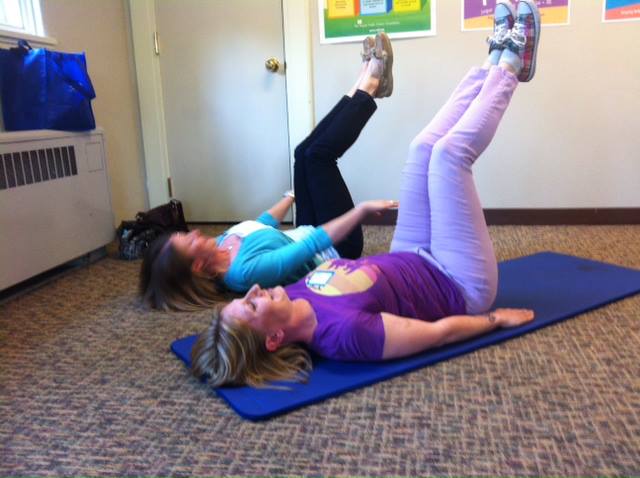
Leg lifts Iying down

***Any time we combine vestibular exercises with any other exercises (whether Pilates or just walking) the exercise becomes exceptionally HARDER!!!

YOU WILL GET TIRED FASTER

YOU MAY BE MORE SYMPTOMATIC

BUT, it’s more like real life so you’ll get BETTER, FASTER!!!***

References:

The Pilates Body: the ultimate at-home guide to strengthening, lengthening, and toning your body – without machines, Brooke Siler 2000; 1st edition

Vestibular Rehabilitation: A Competency Based Course. Lectures from May 2010

Brett Lezamiz, PT, DPT, OCS

BrettBrett Lezamiz is a manually trained therapist delivering individualized, hands-on treatment to her patients.  She is a certified Orthopedic Clinical Specialist (OCS) and has taken over a dozen continuing education courses to augment her knowledge and clinical skills.  She continues to take courses and she joined Pilates Seattle International in order to become a certified Pilates instructor to further satisfy her desire to provide the best care.

Through her years of practice, Brett has developed a treatment style that uses her manual skills to improve soft tissue, fascial and joint mobility.  She strongly believes one must compliment manual/hands-on work with patient-specific movement reeducation, strengthening and stabilization exercises.  This step is crucial or patients cannot return to their prior activities, or when they do, they get reinjured.

In 2010, Brett successfully completed the highest physical therapy certification for vestibular rehabilitation at Emory University (Susan Herdman course).  Since that time, she has been effectively treating patients with dizziness and/or loss of balance due to vestibular, or inner ear, conditions.

Brett attended the University of Southern California for her graduate work in physical therapy where she earned a doctorate of Physical Therapy (DPT) in 2004.  She moved back to the Pacific Northwest during her final clinical residency and has resided here and worked in several outpatient clinical settings since. Brett is active enjoying running, biking, hiking, and skiing and anything with her Golden Retriever.

http://www.pilatesseattle.com/physical-therapy/therapists/brett/

*******

Presentation information is not meant to be taken as medical advice.

Presentations posted online may include discussion notes, links, and other information added by Seattle Dizzy Group.

Download Presentation Handout PDF (original without notes):  www.facebook.com/groups/SeattleDizzyGroup/files/

(Join the Seattle Dizzy Group closed/secret Facebook group to download the presentation.  Send us your email address for invitation to join our Facebook group).

*******

For more information about Vestibular Rehabilitation Therapy (VRT):  http://vestibular.org/understanding-vestibular-disorder/treatment/treatment-detail-page
Posted by: seattledizzygroup | May 9, 2013

Balance Awareness Week Volunteers Needed

Every September, the Vestibular Disorders Association (VEDA) hosts Balance Awareness Week with the goal of raising awareness across the nation for inner ear balance disorders.  This year Balance Awareness Week is September 16-22, 2013 with the theme “Defeat Dizziness” (https://vestibular.org/BAW).  VEDA is encouraging cities around the country to get involved and be a part of Balance Awareness Week 2013.

Over the years, Seattle Dizzy Group has participated in Balance Awareness Week in various ways including email campaigns, letters to Congress, an annual Balance Awareness walk, Balance wristband fundraisers, guest speakers, and a book drive, etc.  This year, Seattle Dizzy Group will be working closely with VEDA to arrange local Balance Awareness Week activities.  We are currently recruiting volunteers to help with a steering committee that will plan and execute Balance Awareness Week events throughout the Seattle area.  The committee will meet once a month May-September.  This is an exciting opportunity for volunteers.  We hope you will consider joining us.  With your help, we can make Balance Awareness Week 2013 a success!

Find out more about Balance Awareness Week and how you can get involved at the Dizzy Support Group Meeting on Saturday, May 11th (1-3 pm at Green Lake Library,  (www.facebook.com/seattledizzygroup/events ).  If you would like to be a Balance Awareness Week volunteer but you won’t be able to attend the May 11th meeting, please contact Seattle Dizzy Group (info@seattledizzygroup.org) or VEDA Development Director Tony Staser (tony.staser@vestibular.org or 503-294-9085) for more information.

Posted by: seattledizzygroup | February 28, 2013

Rare Disease Day 2013

Alone We Are Rare.  Together We Are Strong.

Today, February 28th, is Rare Disease Day!  Find out how you can help raise awareness for people living with rare diseases (like vestibular disorders):  http://rarediseaseday.us/.

Take Action Now!   There are many ways you can get involved this Rare Disease Day.  http://rarediseaseday.us/take-action-now/

Tell your representatives that you care about rare diseases! It just takes a few minutes to send a Handprints on the Hill message and make a difference this Rare Disease Day.  http://rarediseaseday.us/take-action-now/handprints-on-the-hill/

Raise your hand for rare disease research!  Click the link to donate $1.  http://rarediseaseday.us/raise-your-hand/#

Rare Disease Day 2013 Official Video:  http://www.youtube.com/watch?v=n6HReXaUUSw

Posted by: seattledizzygroup | September 21, 2012

10 Things You Didn’t Know About the Balance (Vestibular) System

10 Things You Didn’t Know About the Balance (Vestibular) System

1.  The word “vestibular” refers to the inner-ear balance system. To achieve good physical balance we rely on our brain, eyes, inner-ear, and muscular-skeletal system to work in harmony. Healthy people usually take balance for granted until it is impaired.

2.  Over 35% of US adults aged 40 years and older (69 million Americans) have had vestibular dysfunction at some point in their lives.

3.  Balance problems can occur from inner-ear disease, a virus, a traumatic brain injury, poisoning by certain antibiotics (ototoxicity), autoimmune causes, migraines, and aging.

4.  People with vestibular disorders can have any or all of the following symptoms: vertigo(spinning sensation), dizziness, fatigue, jumping vision, unsteadiness, “brain fog”, nausea/vomiting, hearing loss, and ringing in the ears (tinnitus).

5.  People with vestibular disorders can suffer cognitive impacts, such as poor concentration, memory, and word recall; difficulty reading while tracking printed text; and impaired mental stamina.

6.  Vestibular Rehabilitation Therapy (VRT) has consistency been shown to be an important part of the management of vestibular patients. Research by UTMB (2000) shows that most studies state that patients who use VRT improve by 70-80%.

7.  Some low-impact exercise routines can help improve balance, such as Tai Chi or use of the Wii video game console in conjunction with the Wii Balance Board.

8.  Balance disorders are an invisible chronic illness – invisible because they can’t be seen by the casual observer and chronic because they may or may not get better. They are difficult to diagnose and treat, and because others can’t “see” the outward signs they may assume the patient is overreacting or faking their symptoms.

9.  Some of the early research on the vestibular system came from NASA’s study on returning astronauts in the space program.

10.  A support group can provide helpful information and support. To find a vestibular disorders support group in your area visit VEDA’s website at  http://vestibular.org/findinghelp-support/support-directory

To learn more about balance disorders, see www.vestibular.org or call (800) 837-8428.

Article from VEDA:  https://vestibular.org/sites/default/files/page_files/Top%2010%20things%20you%20didn%27t%20know%20about%20vestibular%20disorders.pdf

Posted by: seattledizzygroup | September 19, 2012

A Balancing Act: Improving Balance and Preventing Falls

A Balancing Act:

Improving Balance and Preventing Falls

by Sherry Olsen, PT

(Presented to Seattle Dizzy Group on 9/08/12)

Improving your balance can be a balancing act between presenting yourself with balance challenges and maintaining  your safety and preventing falls. This presentation offers strategies for better balance and falls including prevention, how to fall, and how to get up if you do fall.

Balance – What Is It?

• Maintaining your center of gravity over the base of support

• Balance can be viewed as a motor skill that emerges from the interaction of multiple systems that are organized to meet functional task goals and that are constrained by environmental context.

» Fay Horak, 1997

How Do You Stay Balanced?

• Sensory information is picked up and sent through sensory neural pathways to the brain

• Processing of sensory information occurs in the central nervous system in several locations

• Motor output information is sent from the central nervous system through motor neural pathways to postural muscles that are activated to maintain balance

Sensory Information

Three main sensory inputs provide information about where the head and body are in space:

– Somatosensory system

– Visual system

– Vestibular system

Somatosensory System

• Provides information from proprioceptors in the joints and cutaneous sensory receptors touching the floor

• Fastest of the sensory pathways

• In normal stance, reliance on somatosensory information is 70%

Visual System

• Provides information about the position of the head with respect to the surroundings.

• Slower pathway as compared to the somatosensory pathway

• Loss or decrease in vestibular function increases visual dependence

• In normal stance, reliance on visual information is 10%

Vestibular System

• Provides internal reference point for head motion

• Detects both linear and rotational head movements

• Contributes both sensory input and motor output

• Sensitive to fast movements vs. slower movements

• In normal stance, reliance on vestibular information is 20%. With increasing perturbation, reliance on vestibular information increases to 70%.

Tips For Better Balance

Be attentive-

Balance is typically considered one of our automatic background functions yet we all demonstrate improved balance skills just by paying attention to what we are doing.

Utilize visual cues-

Vision provides an efficient way to orient ourselves in space compared with the horizon and other people and objects around us.

Using visual targets in the distance as a reference point can help.

Foot position matters-

Try various stance positions and see what feels more stable.

Use it or lose it-

Practice safe balance challenges frequently. The human brain is always able to adapt and improve with practice.

Weight shift to move your center of gravity over your base of support-

Moving your body toward the limit of stability in all directions helps fine-tune your brain’s awareness of your limits and improves standing balance.

Aerobic endurance is key-

Exercise that focuses on aerobic endurance is the most important for good balance.

Maintain hip and ankle strength and flexibility-

Strength in the hips and ankles improve stability.

Flexibility improves the ability to make small corrections to maintain balance. Both strength and flexibility are needed for appropriate postural reactions.

Work on core strength and postural alignment-

Engaging core abdominal muscles stabilizes the center of the body. Maintaining good posture keeps the center of gravity over the base of support.

Eyes and head must work together-

It is cruicial for eye movements and head movements to be aligned. Using points of reference while turning your head can increase stability.

Maintain a consistent schedule-

Keeping a consistent wake and sleep cycle makes it much easier for the brain to function efficiently. Good sleep is important.

What you ingest is important-

Avoid foods that irritate or cause fluctuation in brain function.

Take time for calming and centering activities-

Give yourself time every day to participate in a relaxation routine. Identify stressors and develop coping strategies. Do things that make you feel happy, safe, secure and grounded. These activities will build up reserves to carry you through stressful times.

What Is A Fall?

• An unexpected event in which participants come to rest on the ground floor or lower level.

» Prevention of Falls Network Europe Consensus 2005

Fall Classifications

Intrinsic

– Impaired vision, dementia, vestibular deficit

Extrinsic

– Environment, medication, footwear

Fall Prevention Strategies

• Begin a regular exercise program

• Make the home safer

• Have your health care provider review your medications

• Have your vision checked

– Centers for Disease Control and Prevention

How To Fall And How To Get Up

• If you can tell that a fall is going to occur, it’s better to roll into the fall. Try not to extend or stiffen any joints. This can prevent injuries.

• If you do fall, using a piece of furniture for support can help aid with getting up. If you can come up on one knee then stand up, that usually works best.

References

• Advanced Intervention for Fall Prevention, presented by Laurie Swan, PT, DPT, PhD, Spring PTWA Conference, April 2012.

• Pacific Balance September newsletter, “Tips for Better Balance” by Chris Morrow, PT, NCS, September 2012.

• Vestibular Rehabilitation, Third Edition, Susan J. Herdman, 2007.

Sherry Olsen, PT

Sherry Olsen has a diverse background in treating patients with orthopedic, neurological, and vestibular conditions.  Currently, Sherry has focused her practice on helping patients overcome dizziness and balance issues.  She has worked to educate both patients and therapists about vestibular diagnoses and treatment and has given several lectures to fellow therapists.  Sherry is a certified vestibular specialist educated from the State University of New York at Stony Brook.  Sherry is a member of the American Physical Therapy Association and the Washington Physical Therapy Association.

« Newer Posts - Older Posts »

Categories

Seattle Dizzy Group

Providing support & community for people living with chronic dizziness & imbalance -- in Seattle & beyond